
Plumas County’s Rolling Arrest Record
Plumas County posts no dedicated 72-hour, seven-day, or weekly blotter. For a multi-day view of arrests, the main option is the Citizen RIMS arrests route. That system is official. It lists recent arrests and events going back as far as the interface allows. Nothing on the page confirms the span, though. Treat older rows as past entries, not as a filtered "last week" roster.
The county has never stated how deep the archive runs or when the data refreshes each day. The safest label is simply "older arrest and event entries currently exposed by RIMS." Status changes, too. A person listed in an entry may already be released, transferred, or remanded by a court.
The county rolls events out in order. It draws from one source. That is the Citizen RIMS portal. It supplies the record.
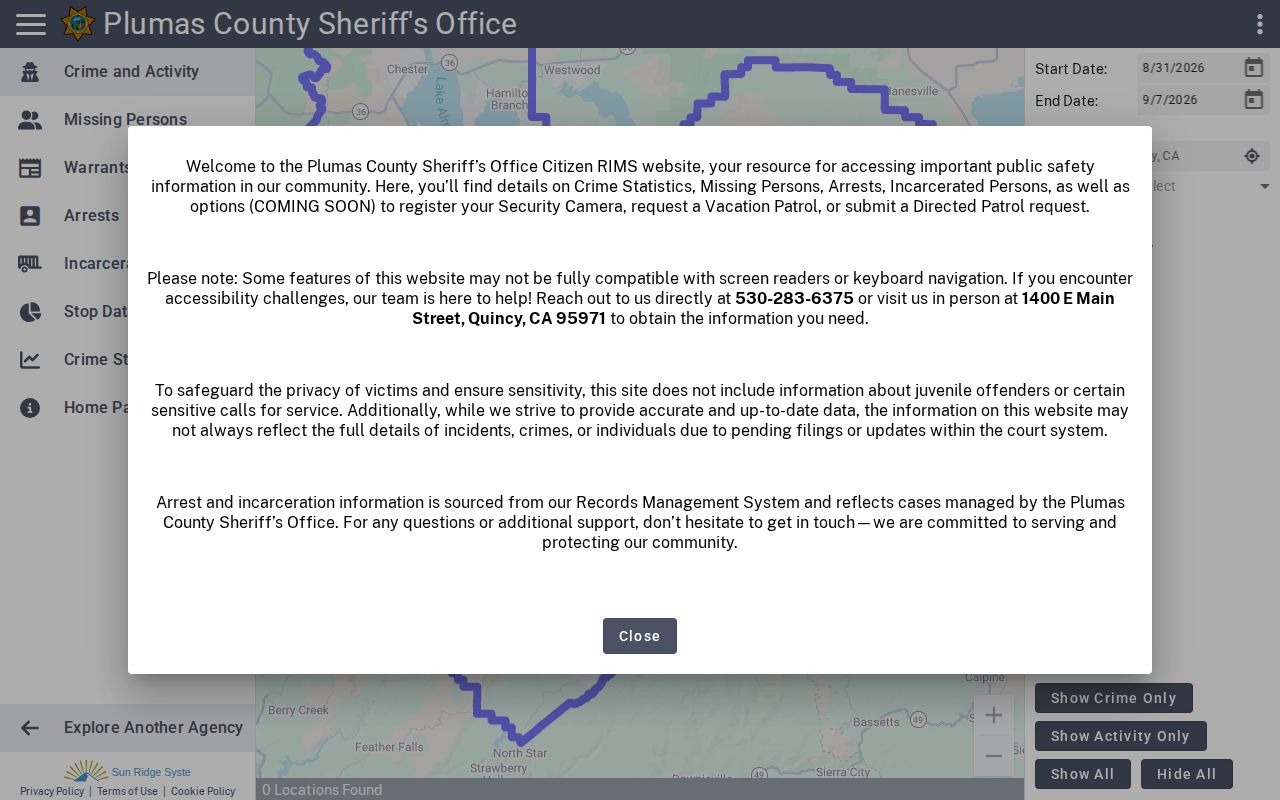
Its arrest section lists events. Check custody separately. The incarcerated section covers who is in jail now. Keep the two apart.
Read Plumas Arrest Reports
A careful multi-day read builds a timeline. Start with the official event data. Then weigh narrative releases from the sheriff and independent reporting against it. A Plumas County arrest story can outlive its row in the system, though publication alone never makes every detail current.
- Open Citizen RIMS arrests and note the check date.
- Move from the newest entry toward the older entries that remain exposed.
- Record date, location, agency, case number, status, and charge wording without adding conclusions.
- Check the Sheriff’s press releases for an official narrative tied to the same event.
- Use local news only as secondary context, then verify custody with the jail and disposition with the court.
The official Sheriff press-release page is the first narrative supplement.
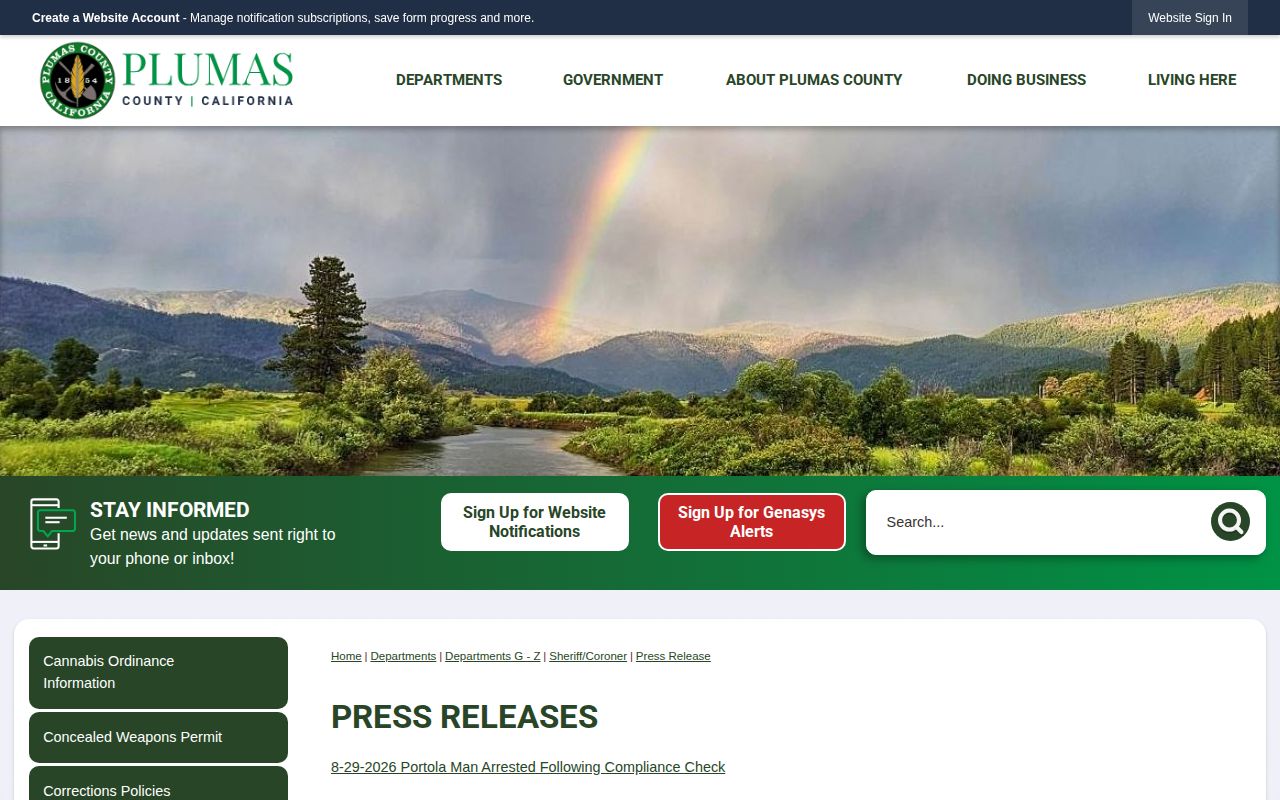
Press releases are selective. They name some arrests, not all. For the newest bookings, the Arrested Today page works better. It verifies same-day material its own way.
Fields in Plumas Arrest Reports
RIMS is a live system. Whatever appears on the current screen is what a searcher can actually read. The Sheriff's General Orders sketch a broader arrest-information log that residents may request. That log can list the date and time, location, case number, name, date of birth, and charges. Each of those fields ties back to a single arrest. Some material stays walled off. That includes anything touching juveniles, victims, witnesses, sex crimes, safety concerns, or active investigations.
| Field | Meaning and limit |
|---|---|
| Date and time | When the recorded event occurred, not necessarily when a web row appeared. |
| Location | The place tied to the event, when publicly displayed. |
| Agency | The department associated with the record; agency coverage can be incomplete. |
| Case number | A key for a focused agency or court follow-up. |
| Name and birth detail | Identity fields subject to public-release restrictions. |
| Charges | Charges recorded at that stage, not findings of guilt. |
| Status or bail | Time-sensitive data that may change after release or court action. |
Three documents often get confused: a booking record, an event report, and a court case. They are not the same thing. The arrest report captures a law-enforcement event. The booking record tracks what happened at the jail. The court file holds the docket and disposition. Treating one as a stand-in for the others leads people astray, since each answers a different question about the same arrest.
Plumas Reports Miss Some Agencies
Any longer look at Plumas County arrests has to respect the agency boundary. RIMS holds PCSO material and nothing more. It does not capture all work by the California Highway Patrol, the California Department of Fish and Wildlife, or the U.S. Forest Service. That comes from Plumas Sun's account of the Sheriff's monthly statistics. So a jail booking can exist at the Plumas County Correctional Facility. The underlying event may have belonged to another agency. Bail complicates the picture too. Someone who posts bail quickly drops out of later custody counts and monthly statistics. That is why a multi-day total should never be labeled every Plumas County arrest. Event rows, jail admissions, current in-custody lists, and statistical totals each measure a different group of people.
A known incident can go missing. When it does, search the responsible agency's own publications. Call the jail about current custody. Ask PCSO for the right arrest-information record. Note: A blank county interface is an unresolved search result, not proof that an event never happened.
Plumas Arrest Narratives and News
When the Plumas County Sheriff's Office puts out a press release, it gives the public a first-hand account of an arrest or investigation. Local news fills a different role. Papers can keep a report alive or add detail the sheriff left out. The Plumas Sun covers Plumas County law enforcement and helps readers make sense of the Sheriff's own arrest statistics. For regional stories, the Sierra Booster latest-news page tracks crime and arrest news from Plumas County and Portola alike. The source capture shows that news landing page and its current headlines.
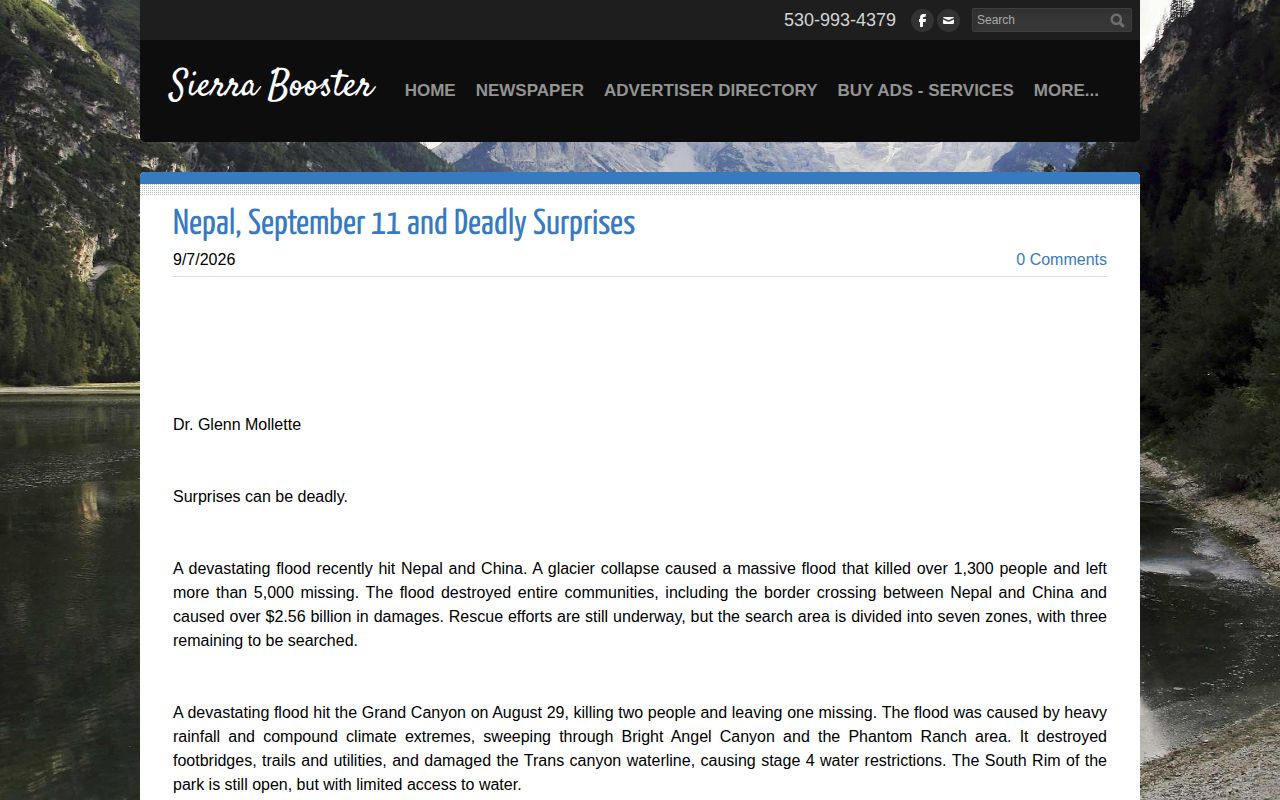
A news headline can point you toward an incident. But its publication date and the reported arrest date are two different things. Keep them separate. Unofficial mugshot aggregators rank last on any list. Mugshots.com holds a Plumas archive that looks stale, with labels tied to old arrests. RecentlyBooked and Arrests.org list no current Plumas County section. BustedNewspaper and Mugshots.zone have no local page. None of these sites is an official roster or custody record. None of their booking photos should be treated as a county publication.
Weekend Plumas Arrest Reporting
Weekend arrests in Plumas County follow no published surge. Nothing posts on a fixed Monday. Holidays bring no set delay either. Those are assumptions, not local facts. Staffing, court closures, and record-system syncing can all slow when a Plumas arrest becomes visible online, yet no numeric rule applies to every case. Note the date and time of any weekend search. Preserve the event timestamp. Then return to the live interface later. For someone in custody now, use the incarcerated route or call the correctional facility. VINE can register release or transfer alerts for a matching person. Court records may lag. The calendar and case file need time to reflect a new matter. California Penal Code § 825 generally requires a person arrested without a warrant to go before a magistrate promptly, usually within 48 hours excluding Sundays and holidays. That statute governs arraignment timing, not when a RIMS arrest report goes online, so treat it as law rather than a publication promise for Plumas County arrest data.
Older Plumas Arrest Records
Web visibility and agency retention are two different things in Plumas County. The jail deactivates a released inmate file. It is stored by number from then on. A file without access for five years is archived. Jail records may even be destroyed after seven years. Those periods govern the institutional file, not how long a Citizen RIMS event stays online for a Plumas arrest. Older arrest material requires the Application for Release of Public Record. The form carries a $3 nonrefundable service fee. It asks for a person, location, case number, time range, and record type. Spell out whether you seek a daily arrest log, a booking record, or another agency record, since the form permits redaction, denial, or referral to the District Attorney, and no fixed turnaround is promised.
Plumas County Sheriff/Coroner1400 East Main Street
Quincy, CA 95971
(530) 283-6375
Non-emergency: (530) 283-6300
The county recent-arrests hub maps the whole route. Jail, booking-record, and court paths are all there. Court outcomes sit elsewhere. Plumas Superior Court holds dispositions, not an old web log of arrests.
Verify Plumas Arrest Outcomes
The Plumas Superior Court record search offers public follow-through on misdemeanor and felony cases. Sealed, confidential, juvenile, and purged records stay excluded as applicable. Its standard form does not provide police reports, arrest reports, transcripts, or warrants. It can instead establish the later docket and disposition when a public case exists. Verify the identity and case number first. Describe the charge "as booked" if that is all the arrest source shows. State any later dismissal, diversion, acquittal, or amendment separately. Names that resemble each other are not one person. Never merge records on a name alone.
- Booking
- Jail intake after an arrest.
- Remand
- A court order placing a person in custody.
- Disposition
- The court’s recorded outcome in the case.
- Sealed record
- A record removed from ordinary public access under law.
Verification belongs with the responsible office. A booking record answers one question. A court file answers what came after the arrest in Plumas County. Checking both protects accuracy and the dignity of the person named.